Packed towers are used in a wide range of industrial processes, including gas absorption, stripping, distillation, extraction and air pollution control. Inside these systems, tower packing provides the contact surface between gas and liquid.
However, maximizing surface area is not the only consideration when selecting packing.
A packing design that provides a large contact area may also create greater resistance to gas flow. On the other hand, packing with a very open structure may reduce pressure drop but provide less effective liquid distribution.
For engineers and process equipment suppliers, the objective is to find an appropriate balance between gas-liquid contact, pressure drop, capacity and operating conditions.
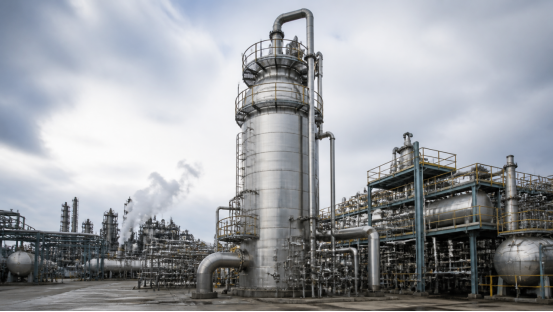
Pressure drop represents the resistance encountered by gas as it passes through the packed bed.
As gas velocity increases, resistance through the packing generally increases as well. Excessive pressure drop can affect the operating requirements of the entire system.
Depending on the process, higher pressure drop may result in:
Greater fan or blower energy requirements
Reduced available operating capacity
Higher operating costs
Increased risk of flooding
Reduced process stability
For this reason, packing should not be selected only according to its nominal surface area.
The relationship between packing geometry, voidage and gas velocity should also be considered.
Voidage refers to the open space within a packed bed.
A packing with a high void fraction provides more open pathways for gas to move through the tower.
This can help reduce resistance to gas flow and provide greater operating capacity.
However, high voidage alone does not guarantee better mass transfer.
The packing also needs to provide effective liquid distribution and sufficient surface area for gas-liquid contact.
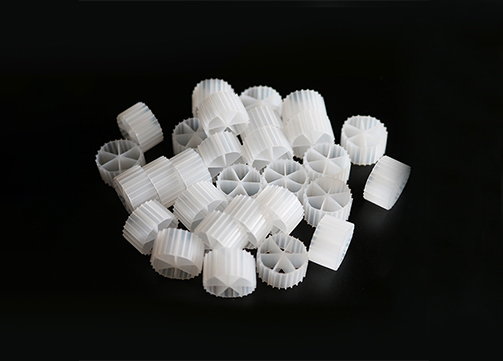
This is why different random packing geometries are used for different process requirements.
The shape of random packing directly affects how gas and liquid move through the packed bed.
Traditional ring designs, such as Raschig Rings, use relatively simple geometries.
More developed designs, such as Pall Rings, Cascade Mini-Rings and Heilex Rings, introduce openings and structural features intended to improve fluid distribution and reduce unnecessary resistance.
The exact performance depends on packing size, material, tower diameter, liquid load, gas load and operating conditions.
Therefore, comparing packing products only by their external appearance does not provide enough information for engineering selection.
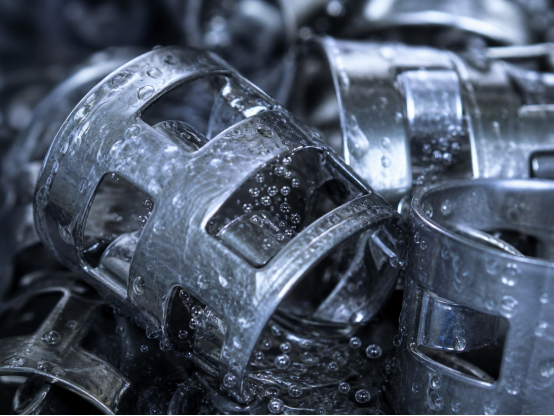
A common assumption is that increasing surface area automatically improves mass transfer.
In practice, the available surface must also be effectively wetted.
If liquid does not distribute evenly across the packing, some of the theoretical surface area may not contribute effectively to gas-liquid contact.
This can lead to:
Dry areas
Channeling
Uneven wetting
Reduced mass transfer
Localized loading
Packing geometry should therefore promote effective liquid spreading while maintaining sufficient gas passages.
Liquid distribution is particularly important in packed towers with large cross-sectional areas.
If liquid enters the packing unevenly, some sections of the bed may receive excessive liquid while other sections remain poorly wetted.
This can reduce the effective performance of the packing.
The packing itself cannot completely compensate for poor liquid distribution from the distributor above it. Proper design of the liquid distributor, packing arrangement and tower internals should therefore be considered together.
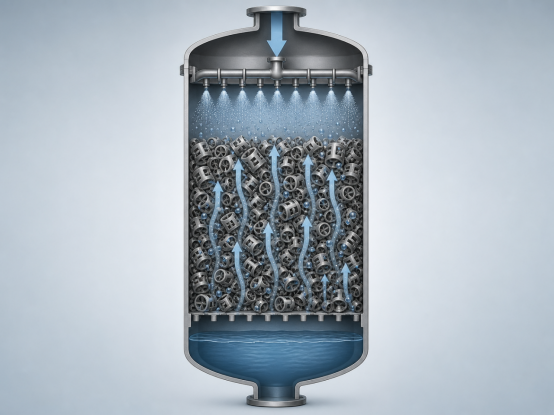
Increasing gas velocity increases the amount of gas passing through the packed bed.
At a certain point, the interaction between gas and descending liquid becomes increasingly intense.
If operating conditions continue to increase, the tower can approach a flooding condition.
Typical warning signs may include:
Rapid increase in pressure drop
Increased liquid holdup
Reduced operating stability
Poorer separation performance
Increased risk of entrainment
The actual flooding point depends on the packing characteristics and the operating conditions of the tower.
For this reason, packing selection should consider both normal operating conditions and the expected operating range.
Very low gas velocity may reduce pressure drop, but lower resistance does not necessarily mean better process performance.
Gas-liquid contact may become less effective depending on the application and packing design.
The goal is therefore not simply to minimize pressure drop.
Instead, engineers generally need to balance:
Pressure Drop + Capacity + Wetting + Surface Area + Mass Transfer
This is one of the main reasons why packed tower designs use different packing geometries.
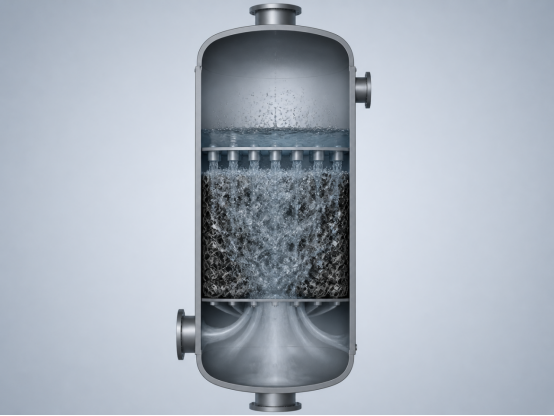
Packing size should also be considered in relation to the tower dimensions.
Very large packing may provide high voidage and relatively open gas passages, but may not provide the same contact characteristics as smaller packing.
Smaller packing can provide greater geometric surface area but may also increase resistance and create greater sensitivity to fouling or blockage in certain applications.
The appropriate size depends on the process rather than a single universal rule.
Material selection also affects tower packing performance.
The website's Random Packing range includes both plastic and metal packing options.
Plastic Random Packing
Plastic materials such as PP can provide:
Low weight
Corrosion resistance
Easy handling
Suitability for many chemical environments
Plastic packing can be useful in applications where corrosion resistance and low material weight are important.
Metal Random Packing
Metal packing can provide:
Higher mechanical strength
Good temperature resistance
Different structural options
Suitability for demanding process environments
Stainless steel and other metal options can be considered when the operating conditions exceed the practical limits of plastic packing.
Material compatibility should always be checked against process temperature and chemical composition.
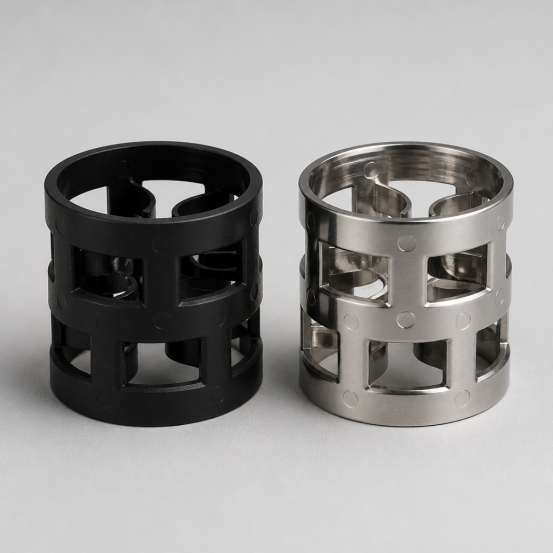
A packing system that performs well when new may behave differently after extended operation.
Deposits can accumulate on packing surfaces, reducing open passages and changing the original gas and liquid flow paths.
Fouling can result from:
Suspended solids
Crystallization
Chemical deposits
Biological growth
Oil or organic contaminants
As deposits build up, pressure drop may increase while effective contact area decreases.
For systems with known fouling risks, packing geometry and material should therefore be considered together with the water or process fluid characteristics.
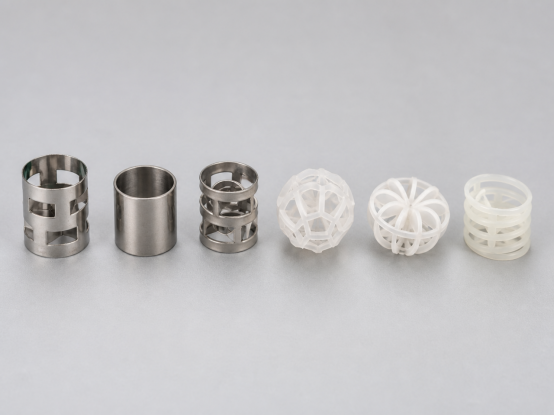
Different random packing designs can serve different engineering requirements.
For example:
Pall Rings: Can be considered when a combination of open structure, gas flow capacity and mass transfer performance is required.
Raschig Rings: Provide a simple and established ring geometry for various packed tower applications.
Polyhedral Hollow Balls: Can provide a highly open structure and are used in applications including gas treatment and mass transfer.
Plastic Rosette Rings: Provide an open structure designed to promote liquid distribution and gas-liquid contact.
Cascade Mini-Rings: Use a stepped geometry to support turbulence and contact between phases.
Heilex Rings: Use a specialized open geometry for mass transfer applications.
The correct choice depends on the actual process conditions rather than the packing name alone.
For replacement or new tower projects, the following information can help suppliers recommend a suitable packing configuration:
Tower diameter
Packing bed height
Gas flow rate
Liquid flow rate
Operating temperature
Operating pressure
Process fluid composition
Expected fouling conditions
Required material
Existing packing type
Packing size
Required quantity
For replacement projects, photographs or samples of the existing packing can also help confirm the required geometry.
When replacing existing tower packing, using exactly the same product is not always the only possible solution.
If the original packing has become difficult to source or the process requirements have changed, an alternative geometry may be considered.
However, substitution should not be based solely on physical dimensions.
Engineers should compare relevant characteristics such as:
Surface area
Voidage
Packing factor
Pressure drop
Material
Operating temperature
Chemical compatibility
Gas and liquid loading
A packing substitution should be evaluated against the actual process conditions before installation.
The performance of a packed tower depends on the interaction between packing geometry, gas flow, liquid distribution and operating conditions.
A packing with high surface area is not automatically the best choice. Voidage, pressure drop, wetting, fouling resistance, material compatibility and operating capacity also need to be considered.
For new installations and replacement projects, evaluating the complete process conditions can help engineers select a packing configuration that provides an appropriate balance between mass transfer efficiency and operating resistance.


Address
No.88, Qilian Street, High-Tech Zone, Shijiazhuang, Hebei 050000, China
Tel
+86 311 6779 0805
+86 188 4915 5666
Copyright © Hebei Long Zhuo Trade Co., Ltd. All Rights Reserved Technical Support:  Sitemap