
Estimating the right quantity of PVC sheet piles is an important step before placing an order. For a simple straight wall, the calculation can be relatively straightforward. However, projects with different wall heights, corners, varying pile lengths or specific installation requirements need a more detailed estimate.
For contractors, engineers and procurement teams, the goal is not only to calculate how many piles are needed, but also to make sure the selected profile, pile length and quantity match the actual project.
The first figure to determine is the total length of the sheet pile wall.
For a straight wall, measure the complete distance from one end to the other. If the project contains several separate sections, calculate each section individually.
For example, a project may include:
40 m of main retaining wall
15 m return section
10 m connection section
The total wall length would be 65 m.
Keeping each section separate is useful when different sections require different pile lengths or installation arrangements.
The number of PVC sheet piles depends on how much wall each pile covers after interlocking.
This is known as the effective coverage width.
The basic calculation is:
Required Piles = Total Wall Length ÷ Effective Coverage Width
For example, if the wall is 60 m long and the effective coverage width of the selected profile is 0.6 m:
60 ÷ 0.6 = 100 piles
This is a preliminary quantity. The final order may need additional piles depending on the wall layout, cutting requirements and installation conditions.
When comparing different PVC sheet pile products, always use the manufacturer's effective coverage width rather than simply comparing the overall width.
The effective coverage width depends on the selected profile.
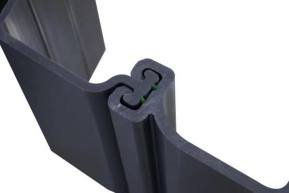
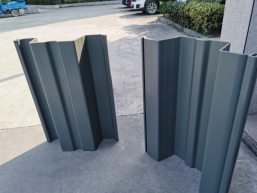
PVC sheet piles are available in different configurations, including U-type, Z-type and W-type profiles.
The profile should be confirmed before making the final quantity calculation because different profiles can have different dimensions and coverage characteristics.
For procurement, it is useful to confirm:
Profile type
Overall width
Effective coverage width
Thickness
Section dimensions
Weight per meter
Available lengths
Once the profile is confirmed, the quantity can be calculated using the corresponding specifications.
The number of piles is only one part of the material requirement.
You also need to determine how long each pile needs to be.
The required pile length normally needs to account for both the exposed wall height and the portion embedded into the ground.
For example, a project with a 3 m exposed wall may require a pile longer than 3 m because additional length is needed below the ground or water level.
The required embedment can depend on:
Soil conditions
Wall height
Water level
Retained soil
Ground conditions
Applied loads
Project design
The final embedment depth should be established by the project engineer based on the actual site and structural requirements.
Not every construction project has a uniform wall height.
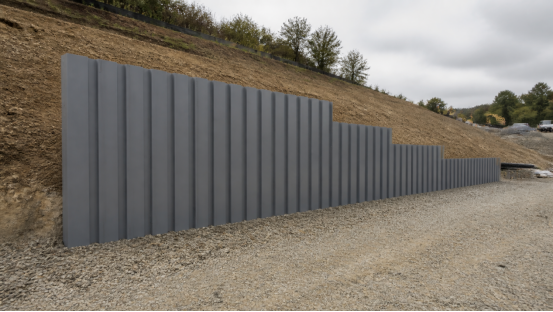
A seawall may follow an uneven shoreline, while a retaining wall may cross different ground elevations.
If one section requires 3 m piles and another requires 5 m piles, it may be more practical to calculate the two sections separately.
For example:
Section A: 40 m wall using 4 m piles
Section B: 30 m wall using 5 m piles
This approach can reduce unnecessary cutting and make the material order easier to organize.
Corners are another factor that can affect the final quantity.
A straight 100 m wall is easy to calculate. A 100 m wall with several corners, returns or connections requires closer attention to the actual layout.
Before finalizing the quantity, identify:
Corners
Returns
End sections
Wall intersections
Connections to existing structures
Changes in direction
For projects with a complicated layout, providing the supplier with a drawing is often the easiest way to avoid quantity errors.
PVC sheet piles may need to be cut when the project has different wall heights or uneven ground levels.
If standard-length piles are used, some material may become offcuts.
Before ordering, consider whether the supplier can provide customized pile lengths.
Customized lengths may be useful when:
Wall heights vary
Ground levels change
Large quantities are required
Cutting on site would create significant waste
The potential saving should be considered against production and delivery requirements.
A theoretical calculation may produce an exact number, but construction projects can require some additional material.
Extra piles may be useful when there is a possibility of:
Cutting
Installation damage
Layout changes
Replacement
Future maintenance
There is no single additional percentage that is suitable for every project.
A simple straight wall may need very little additional material, while a complicated project with multiple sections and difficult installation conditions may require a larger allowance.
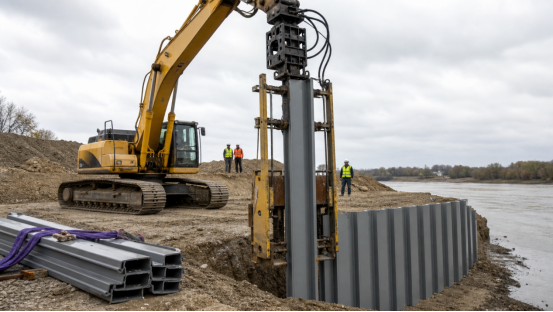
The quantity calculation should be reviewed together with the installation conditions.
Important information includes:
Soil type
Ground density
Water level
Existing structures
Underground obstructions
Available installation equipment
For example, difficult ground conditions may affect the practical installation process and should be considered before confirming pile length and quantity.
The supplier can provide product specifications, but structural requirements and final installation decisions should be confirmed by the project engineering team.
The PVC sheet pile itself may not represent the complete wall system.
Depending on the project design, additional components may include:
Tie rods
Anchors
Waler systems
Concrete caps
Geotextiles
Riprap
Drainage components
These items should be included separately in the project material list.
If you are requesting a complete quotation, provide the supplier with information about any supporting components already specified in the project design.
Total product weight can be useful when planning transportation and site handling.
A basic estimate can be made from:
Total Weight ≈ Number of Piles × Pile Length × Weight per Meter
The actual weight should be based on the manufacturer's specification for the selected profile.
This information is useful when arranging:
Container loading
Truck transportation
On-site unloading
Storage
Installation equipment
For international projects, shipping dimensions and bundle configuration should also be confirmed with the supplier.
Consider a straight retaining wall with:
Wall length: 80 m
Effective coverage width: 0.5 m
Required pile length: 4 m
The preliminary quantity is:
80 ÷ 0.5 = 160 piles
The project team should then confirm whether:
The entire wall uses the same profile
The pile length is suitable
The wall contains any corners
Additional cutting is required
Spare piles are required
Supporting components are needed
If all conditions are consistent, 160 piles provides the basic material quantity for the wall.
The final order quantity should be confirmed after reviewing the actual project layout.
When requesting a quotation for PVC sheet piles, providing the following information can make the process much faster:
Project application: Seawall, retaining wall, bulkhead, flood control or other application.
Wall length: Total length and individual sections if applicable.
Required pile length: If already determined by the project engineer.
Wall height: Approximate exposed height.
Preferred profile: U-type, Z-type, W-type or supplier recommendation.
Quantity: Estimated number of piles.
Site conditions: Basic soil and installation information.
Delivery location: Country and project site.
Drawings: Recommended for projects with corners, different elevations or multiple sections.
With this information, the supplier can provide a more accurate product recommendation and quotation.
Before confirming the order, review the following points:
Total wall length
Effective coverage width
PVC sheet pile profile
Required pile length
Embedment depth
Number of wall sections
Corners and returns
Cutting requirements
Additional material
Supporting components
Total weight
Packaging
Delivery requirements
This final check can help prevent quantity discrepancies between the project calculation and the actual material required on site.
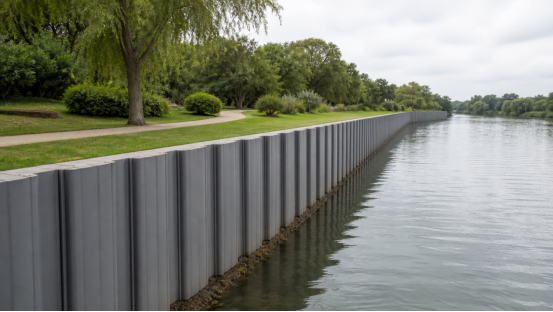
Cooling Tower Infill supplies U-type, Z-type and W-type PVC sheet piles for applications such as seawalls, bulkheads, retaining walls and water-control structures.
For a project quotation, customers can provide the wall length, required pile length, application, preferred profile and delivery location. These details can then be used to confirm the appropriate specification and estimated quantity.
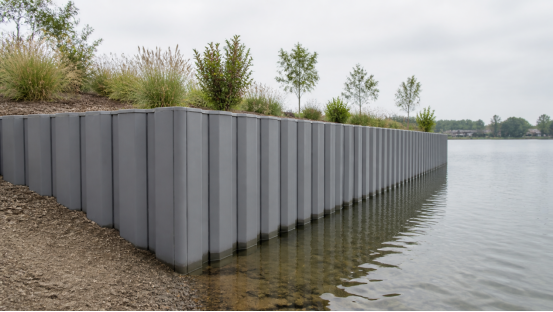
Estimating PVC sheet pile requirements starts with a simple calculation, but the final quantity depends on the actual project conditions.
The key figures are total wall length, effective coverage width and pile length. Corners, different wall heights, embedment requirements, cutting, site conditions and additional components should then be considered before the order is finalized.
For a simple straight wall, the quantity can be estimated quickly. For larger seawall, bulkhead or retaining wall projects, providing a project drawing and detailed dimensions will give a more reliable basis for material planning and quotation.
If you are not sure how to calculate the required quantity, pile length or suitable profile for your project, you do not need to finalize the calculation on your own.
You can send Long Zhuo your project information, such as the wall length, required wall height, application, site conditions and project drawings. Our team can review the basic requirements and help you determine a suitable PVC sheet pile specification and estimate quantity.


Address
No.88, Qilian Street, High-Tech Zone, Shijiazhuang, Hebei 050000, China
Tel
+86 311 6779 0805
+86 188 4915 5666
Copyright © Hebei Long Zhuo Trade Co., Ltd. All Rights Reserved Technical Support:  Sitemap