An old cooling tower may continue operating for many years while gradually losing its original cooling performance. Common signs include a higher cold-water outlet temperature, increased fan or pump load, visible dry areas inside the tower, excessive water carryover, blocked airflow, frequent cleaning, and unstable cooling during periods of high production demand. These problems are rarely caused by only one component. The cooling tower spray nozzles may no longer distribute water evenly, but damaged fill media, blocked air inlet louvers, or deteriorated drift eliminators can also reduce the effectiveness of the complete system. For this reason, upgrading an old cooling tower water distribution system should be approached as an integrated internal-component retrofit. The project should evaluate how water enters the tower, how it spreads across the fill, how air passes through the heat-transfer section, and how entrained droplets are recovered before the air leaves the tower.
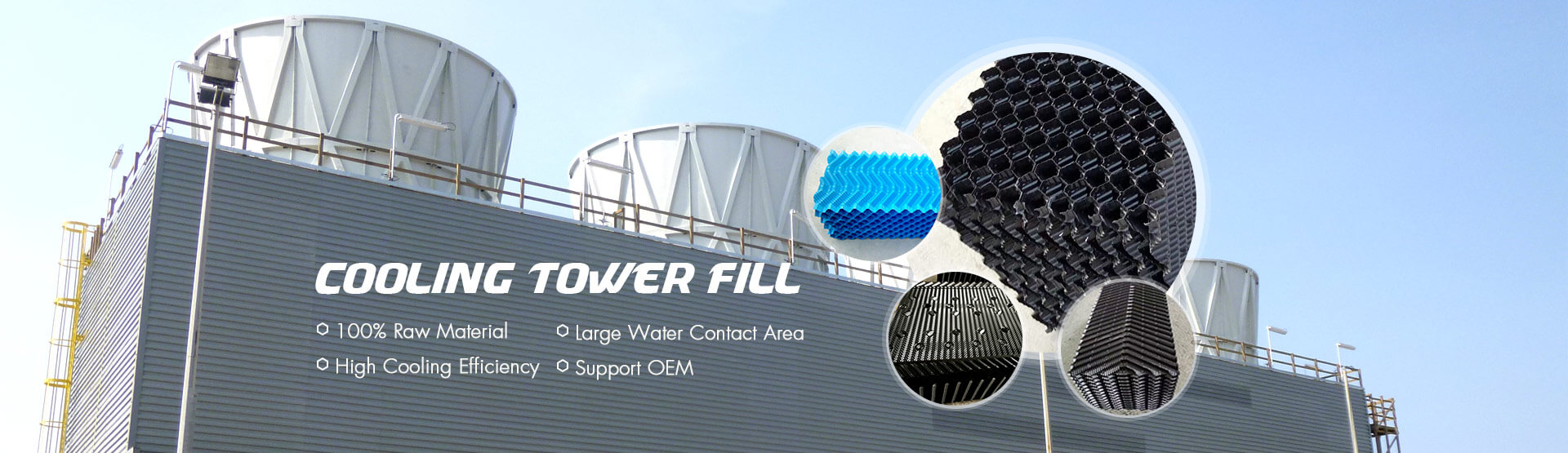
Long Zhuo supplies cooling tower spray nozzles, crossflow and counterflow fill media, PP trickle fill, drift eliminators, and air inlet louvers for cooling tower replacement and retrofit projects. These products can be selected individually or combined into a coordinated upgrade solution according to the tower structure and operating conditions.
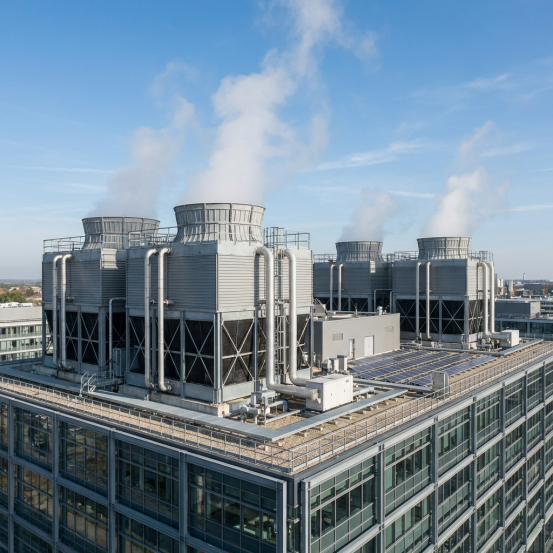
The performance of a cooling tower depends on balanced interaction between circulating water and airflow. Hot water must be distributed evenly, the fill must create sufficient air–water contact area, the louvers must allow air to enter without excessive restriction, and the drift eliminators must recover water droplets from the leaving air stream.
If one component is damaged or incorrectly selected, it can reduce the effectiveness of the other components. New nozzles cannot fully restore performance when the fill is heavily scaled or collapsed. New fill cannot operate efficiently when blocked louvers restrict airflow. Replacing drift eliminators alone will not correct excessive carryover caused by poor water distribution.
The first step in an upgrade project is therefore a complete inspection of the tower internals. The inspection should cover:
Water distribution basins, headers and branch pipes
Cooling tower spray nozzles
Crossflow or counterflow fill media
Fill support structure
Drift eliminators
Air inlet louvers
Cold-water basin, strainers and drains
Internal supports and access components
Operating data should also be reviewed, including circulating water flow, inlet and outlet water temperatures, pump pressure, fan operation, water quality and the current process heat load. This information helps distinguish a component problem from a broader hydraulic, mechanical or process issue.
Cooling tower spray nozzles determine how circulating hot water reaches the fill surface. Worn, blocked, damaged or incorrectly positioned nozzles can create dry areas, excessive overlap or concentrated water streams. As a result, only part of the installed fill surface contributes effectively to heat transfer.
During the inspection, each nozzle should be checked for changes in its orifice, spray pattern, connection and installation position. Distribution pipes and hot-water basins should also be cleaned so that sediment, scale or debris does not immediately block the replacement components.
Replacement nozzle selection should consider:
Crossflow or counterflow tower design
Gravity-fed or pressurized distribution
Flow rate per nozzle
Available pressure or water head
Orifice size
Spray pattern and coverage diameter
Nozzle spacing
Distance between the nozzle and fill
Connection size
Circulating water temperature and quality
Crossflow cooling towers often use gravity-fed hot-water basins with target-type nozzles installed above the fill. Counterflow towers commonly use pressurized headers and branch pipes with nozzles selected according to the available operating pressure.
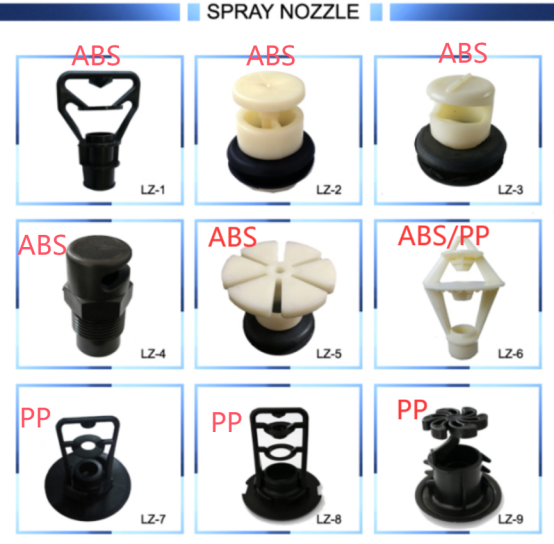
Long Zhuo’s spray nozzle range includes spiral target nozzles and other replacement configurations for cooling tower water distribution. Different spray patterns, flow capacities, materials and installation dimensions can be matched to new towers or existing retrofit projects.
The purpose of the nozzle upgrade is not simply to replace old plastic parts. The new layout should restore balanced flow across the full tower plan area so that all sections of the fill receive appropriate water coverage.
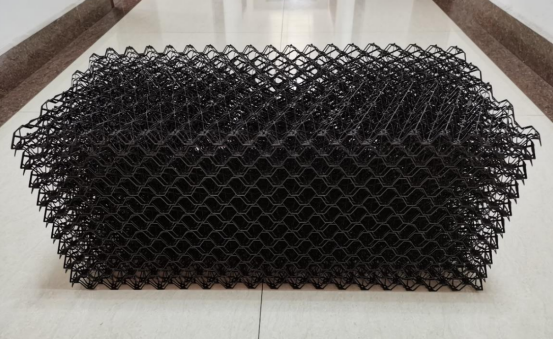
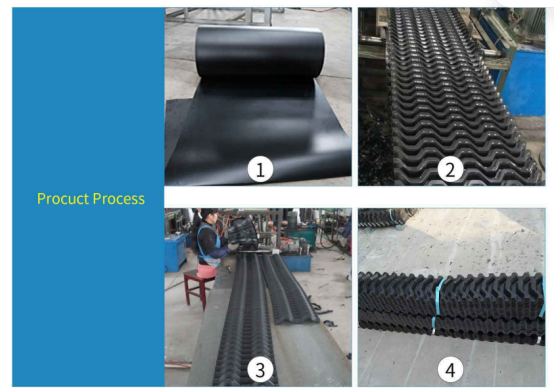
Cooling tower fill is the primary heat-transfer component inside the tower. It increases the contact area between circulating water and air by spreading water into thin films or repeated droplets. After extended operation, fill media may become brittle, deformed, scaled, blocked or partially collapsed. These conditions reduce the available heat-transfer surface and may also restrict airflow through the tower. Typical signs include visible mineral deposits, biological growth, compressed fill blocks, uneven water movement and increasing cold-water temperature.
Replacing damaged fill can restore the air–water contact area without replacing the complete cooling tower structure. However, the new fill must match the tower type, support arrangement, water quality, operating temperature and maintenance conditions.
Crossflow fill is designed for towers in which air enters horizontally through the sides while water moves downward from the hot-water basin.
When replacing crossflow fill, buyers should confirm the original block dimensions, sheet orientation, support position, flute geometry and airflow direction. The new media must fit the existing tower structure while maintaining suitable water distribution and air passage.
Counterflow Cooling Tower Fill
Counterflow fill is used where air moves upward against the downward flow of water. The fill blocks are installed below the spray distribution system and must coordinate with the nozzle layout, drift eliminator position and support grid.
Correct block dimensions and installation orientation are important because changes in fill depth or airflow resistance can affect the tower’s operating balance.
PP Trickle Fill for Poor Water Quality
Closely spaced film fill may require frequent cleaning when circulating water contains high levels of suspended solids, sludge, oil, fibers, biological material or scale.
Long Zhuo’s PP trickle grid fill has a more open structure that allows water and air to pass through larger channels. It is suitable for applications such as power generation, refining, chemical processing, steel production and other industrial systems with challenging circulating-water quality.
Selecting the correct fill type is one of the most important decisions in an old cooling tower upgrade. A design that provides very high surface area may perform poorly if it becomes blocked quickly under the site’s actual water conditions.
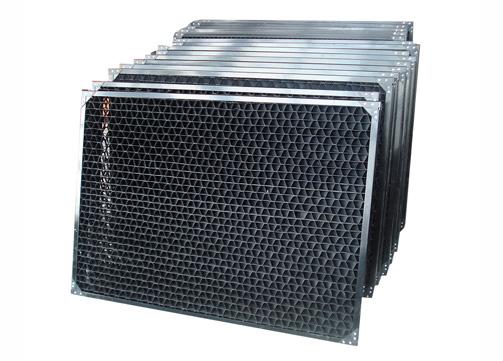
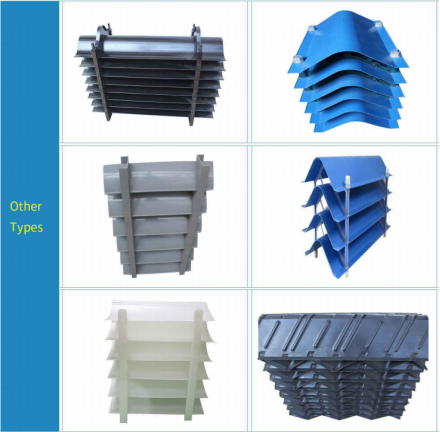
Drift eliminators are installed in the leaving-air path to capture water droplets carried upward by the airflow. Their formed channels force the air to change direction, causing entrained droplets to contact the blade surfaces and return to the circulating-water system.
After years of operation, drift eliminators may become brittle, deformed, scaled, blocked or incorrectly positioned. Damaged sections can allow more droplets to leave the tower, while blocked passages can create unnecessary resistance to airflow.
During a retrofit, drift eliminators should be checked for:
Cracked or missing sections
Scale and biological deposits
Deformation caused by heat or unsupported installation
Incorrect blade orientation
Gaps between adjacent modules
Restricted air passages
Poor access for removal and cleaning
Replacement selection should balance droplet-capture performance with airflow resistance. The module dimensions must fit the existing support structure and tower geometry. Material choice should also reflect operating temperature, UV exposure, water chemistry and installation conditions.
Long Zhuo supplies modular PVC and PP cooling tower drift eliminators for new installations and replacement projects. Available designs include formed blade and cellular structures that separate droplets from the leaving air and return them to the tower.
Air inlet louvers are installed at the air-entry openings of the cooling tower. They help guide airflow into the fill section while reducing splash-out, sunlight penetration and the entry of larger debris.
Old louvers may become scaled, cracked, distorted or partially blocked. Restricted inlet openings reduce the amount and uniformity of air entering the tower. Even when new fill and nozzles are installed, poor air inlet conditions can prevent the tower from using the upgraded heat-transfer surface effectively.
The louver inspection should examine:
Blocked air passages
Mineral or biological deposits
Broken or missing blades
Warping and deformation
Gaps around the tower casing
Water splash-out
Uneven air entry around the tower perimeter
Support frame condition
Replacement air inlet louvers should match the tower opening, airflow direction, support method and operating environment. Module size, blade spacing, material and installation orientation should be confirmed before production.
Long Zhuo’s air inlet louvers are designed to improve air entry while helping control splash-out, sunlight and debris. They can be supplied together with fill media, drift eliminators and spray nozzles as part of a coordinated cooling tower internal-component upgrade.
A successful cooling tower retrofit requires more than selecting each component separately. The water distribution, heat-transfer and airflow components must work together within the existing tower dimensions.
The main relationships include:
Component | Main function | Key retrofit relationship |
Spray nozzles | Distribute water across the fill | Must match flow, pressure, spacing and fill coverage |
Cooling tower fill | Creates air–water contact area | Must match tower type, water quality and airflow |
Drift eliminators | Capture droplets from leaving air | Must match airflow volume, support layout and tower dimensions |
Air inlet louvers | Guide incoming air and reduce splash-out | Must provide sufficient open area for the new fill |
Fill supports | Carry the fill blocks | Must match fill weight, block size and operating load |
Distribution pipes or basins | Deliver water to the nozzles | Must provide balanced flow across the tower |
For example, replacing blocked fill with a deeper or denser media may change airflow resistance. If the existing fan and louvers cannot provide sufficient airflow, the expected cooling improvement may not be achieved.
Similarly, changing the nozzle flow rate without reviewing the pump, pipework and total number of nozzles can create hydraulic imbalance. Selecting drift eliminators with unsuitable dimensions may produce gaps or excessive airflow restriction.
The retrofit design should therefore use the actual tower drawings, internal measurements and operating data to develop a coordinated component arrangement.
A structured retrofit process reduces the risk of ordering incompatible components or repeating existing performance problems.
1. Inspect and Measure the Existing Tower
Record the cooling tower type, number of cells, internal dimensions, fill depth, nozzle layout, drift eliminator dimensions, louver opening and support structure.
Take photographs of the installed components and retain physical samples when possible.
2. Review Operating Conditions
Confirm circulating flow, water temperatures, operating pressure, water quality, process load and seasonal working conditions.
Identify whether the tower suffers mainly from scaling, blockage, material aging, high temperature, uneven water distribution or excessive drift.
3. Clean the Tower Internals
Remove scale, biological deposits, sludge and debris from basins, pipes, supports and structural surfaces before installing new components.
Cleaning helps expose damaged areas and prevents new nozzles or fill from becoming contaminated immediately after installation.
4. Select the New Internal Components
Choose the spray nozzle, fill type, drift eliminator and air inlet louver according to the complete tower requirements.
The proposed products should match:
Tower type and airflow direction
Installation dimensions
Water temperature and quality
Mechanical support arrangement
Required flow capacity
Maintenance access
Material preference
Expected service environment
5. Confirm Samples and Drawings
Before mass production, verify product drawings, dimensions, material, thickness, connection details, module orientation and order quantity.
Samples are particularly useful for confirming nozzle connections, fill flute direction, drift eliminator profiles and louver installation.
6. Install and Commission the Upgraded System
After installation, operate the water circulation system and inspect the full fill surface for balanced coverage. Check that the nozzles remain secure, fill blocks are correctly oriented, drift eliminators have no gaps and louvers provide unrestricted air entry.
After the tower returns to normal operation, record the inlet and outlet water temperatures, flow, pressure and operating load for comparison with the pre-upgrade condition.
Not every project requires replacement of all tower internals. The upgrade scope should be based on component condition and operating performance.
Observed problem | Components to inspect first |
Dry areas or concentrated water flow | Spray nozzles, pipes, basins and fill |
Higher cold-water temperature | Fill, nozzles, louvers and airflow system |
Severe scaling or blockage | Fill, nozzles, louvers and water treatment |
Excessive water carryover | Drift eliminators, nozzle coverage and airflow |
Water splashing from tower sides | Air inlet louvers and water distribution |
High airflow resistance | Fill, drift eliminators and louvers |
Frequent fill blockage | Film fill selection and PP trickle fill alternatives |
Uneven performance between tower cells | Nozzle balance, fill condition and airflow openings |
In many older towers, combined replacement provides better results because several internal components have reached a similar level of aging. However, reusable supports and serviceable components can remain in place when their dimensions and condition suit the new system.
Upgrading an old cooling tower water distribution system should not focus on spray nozzles alone. The nozzles distribute water, the fill creates the heat-transfer surface, the air inlet louvers support balanced airflow, and the drift eliminators recover entrained droplets from the leaving air.
Evaluating these products as one system helps identify the actual performance limitations and develop a more effective retrofit plan. Depending on the tower condition, the project may involve replacing one product category or coordinating several internal components within the same maintenance shutdown.
Long Zhuo supplies cooling tower fill media, PP trickle fill, spray nozzles, drift eliminators and air inlet louvers for repair, replacement and performance-recovery projects. Buyers can submit tower drawings, internal dimensions, operating data, product samples and photographs to receive a customized cooling tower component proposal.


Address
No.88, Qilian Street, High-Tech Zone, Shijiazhuang, Hebei 050000, China
Tel
+86 311 6779 0805
+86 188 4915 5666
Copyright © Hebei Long Zhuo Trade Co., Ltd. All Rights Reserved Technical Support:  Sitemap