Vinyl sheet piles are increasingly recognized as a modern alternative to traditional steel and timber piling systems. Their use in infrastructure is critical, particularly for coastal protection, flood defense, and land reclamation projects. Unlike conventional materials, vinyl offers a unique combination of corrosion resistance, lightweight handling, and cost efficiency.
Installing vinyl sheet piles in sandy or arid soil under high-temperature, high-sunlight conditions demonstrates their practicality in challenging environments.
Extreme climates characterized by high temperatures, intense solar radiation, large day-to-night temperature swings, and chemically aggressive soils present unique environmental and logistical challenges. Remote sites or coastal zones may require careful planning for material delivery, handling, and installation.
Without proper adaptation, materials can degrade quickly, leading to costly repairs and reduced service life. Long-term performance cannot be achieved by simply applying standard practices from temperate regions. By integrating advanced formulations, reinforcement strategies, and installation techniques tailored to harsh climates, vinyl sheet piles can achieve durable, long-term performance.
Vinyl sheet piles are engineered interlocking sections made from PVC or advanced composite vinyl materials, designed to form continuous, watertight barriers. Driven deep into the ground, they serve as reliable structural elements for:
Shoreline protection
Erosion control
Cutoff walls
General civil engineering applications
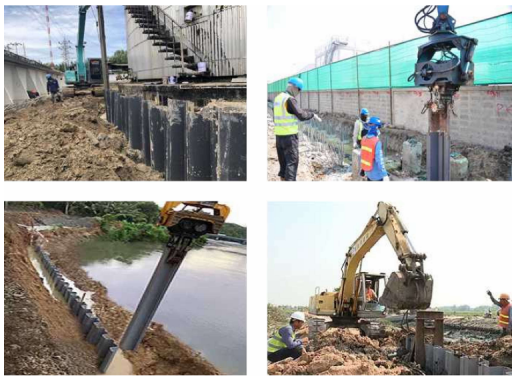
Corrosion resistance: Vinyl does not rust or deteriorate when exposed to saline groundwater or chemically aggressive soils.
Lightweight: Simplifies transportation and installation, particularly in remote or difficult-to-access locations.
Economic efficiency: Lower material cost, faster installation, and minimal maintenance translate into favorable lifecycle savings.
High-quality formulations allow vinyl sheet piles to maintain structural integrity for decades, even under continuous environmental exposure.
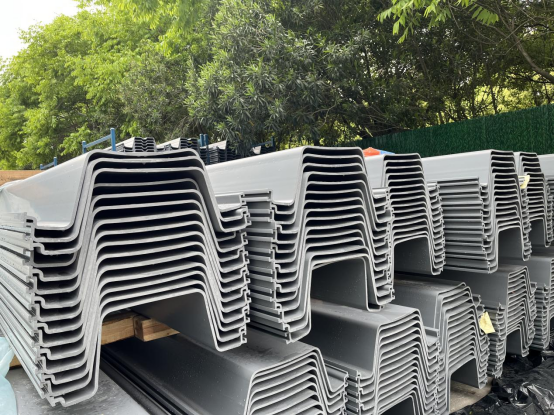
1. High Heat & Temperature Variations
Extreme summer temperatures can soften vinyl, affecting stiffness and load-bearing capacity. Large day-to-night temperature swings create expansion and contraction stresses, which can compromise structural integrity if not properly accounted for during design.
2. UV Exposure & Material Degradation
Prolonged exposure to intense sunlight accelerates polymer aging, causing discoloration, brittleness, and reduced mechanical strength. Vinyl sheets without UV-resistant formulations may lose protective qualities over time.
3. Soil & Groundwater Conditions
Saline or chemically aggressive soils, as well as groundwater containing chlorides and sulfates, require vinyl formulations tested for chemical compatibility. Steel alternatives in such environments are prone to corrosion, making vinyl a more durable solution.
4. Installation Challenges
Remote site logistics: Difficult terrain or limited access routes require careful planning for transportation.
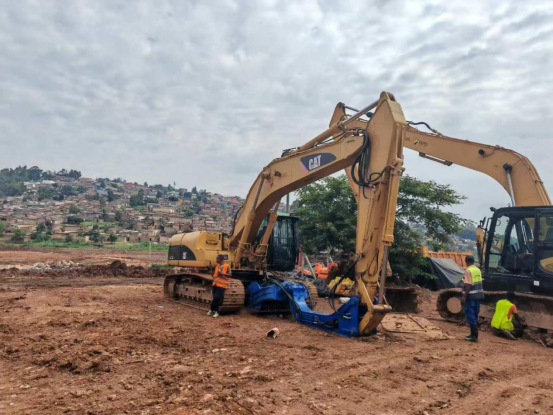
Handling and equipment: Lightweight vinyl requires careful handling to prevent damage. Specialized vibratory or pressing equipment ensures proper interlock without cracking.
Soft soils or tidal zones: Coastal or soft soil conditions can complicate installation, requiring adaptive techniques.
UV-Resistant Vinyl Formulations: Modern vinyl sheet piles can incorporate stabilizers and additives that absorb or reflect UV radiation, delaying polymer breakdown and extending service life in areas with high sunlight exposure.
Reinforcement Strategies: In high-load applications, vinyl piles can be reinforced with internal steel or composite elements. Hybrid systems combine the corrosion resistance of vinyl with structural strength, ensuring stability under heavy soil or hydraulic pressures.
Pre-drilling
Soils may range from loose sand to dense, compacted layers. Pre-drilling pilot holes reduces soil resistance, minimizing the risk of pile deformation or interlock damage.
Advantages: Prevents cracking, ensures alignment, reduces equipment wear.
Best practice: Use augers slightly smaller than pile width to maintain soil grip while easing installation.
Vibratory Driving
Lightweight vinyl can be overstressed by impact hammers. Vibratory hammers apply controlled oscillations, reducing soil resistance and stress on interlocks.
Advantages: Faster installation, reduced risk of damage, improved interlock integrity.
Best practice: Adjust vibration frequency to match soil conditions for efficient, safe pile penetration.
Modular Transport
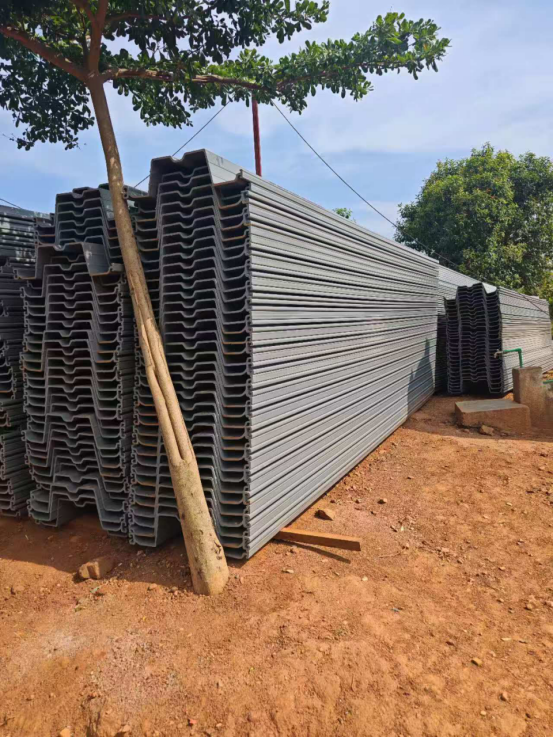
Vinyl sheet piles’ lightweight and modular nature allows them to be bundled and transported using smaller vehicles or manual handling in constrained areas.
Advantages: Reduces reliance on heavy machinery, lowers transport costs, and enables access to remote sites.
Best practice: Protect bundles from UV exposure during transport and storage.
Adherence to international standards such as ASTM and EN ensures consistent quality and reliable performance. Proper quality management procedures guarantee that materials meet rigorous benchmarks for durability and safety.
Lifecycle Cost Benefits vs. Steel: Vinyl sheet piles require minimal maintenance and have longer service life in corrosive environments, reducing lifecycle costs compared with steel alternatives.
Environmental Impact & Recyclability: Vinyl is recyclable at the end of its service life. Its lightweight nature reduces transport emissions, and durability minimizes the need for replacement materials, supporting sustainable infrastructure practices.
As a PVC Sheet Pile manufacturer, we take pride in producing high-quality vinyl seawall panels, vinyl sheet piling, and PVC sheet piles that are designed to provide durable and reliable solutions for marine construction projects.
Our U type vinyl seawall panels are ideal for use in seawall and bulkhead applications, offering excellent resistance to corrosive saltwater environments. Our Z type vinyl sheet piling is an excellent choice for retaining walls and erosion control, providing a long-lasting solution that is easy to install and maintain. Finally, our W type PVC sheet piles are perfect for use in cofferdam and cut-off wall applications, offering superior strength and durability.
Previous: None


Address
No.88, Qilian Street, High-Tech Zone, Shijiazhuang, Hebei 050000, China
Tel
+86 311 6779 0805
+86 188 4915 5666
Copyright © Hebei Long Zhuo Trade Co., Ltd. All Rights Reserved Technical Support:  Sitemap