
Replacing damaged or aging seawall panels can be more complicated than installing a completely new system. Existing seawalls may have been built with specific sheet pile profiles, interlocking connections, dimensions, and installation methods. Choosing replacement PVC sheet piles that are incompatible with the original structure can lead to fitting problems, additional installation work, and unnecessary project costs.
For contractors, marine construction companies, and seawall maintenance professionals, the key is to identify the existing system before selecting replacement materials. This guide explains what to check when sourcing compatible replacement PVC sheet piles for an existing seawall.
The first step is to identify the profile of the sheet piles currently installed in the seawall.
PVC sheet piles are available in different profiles, including U-type, Z-type, and W-type designs. Each profile has a different cross-sectional shape and connection configuration, so they should not be considered interchangeable without checking their specifications.
When inspecting the existing seawall, look for:
The overall cross-sectional shape of the panels
The configuration of the interlocking edges
The visible width and thickness of each panel
Any manufacturer markings or product identification
Original drawings, purchase records, or installation documents
Photographs of the exposed panel ends and interlocking connections can help a supplier identify potential replacement options. If the original product information is unavailable, measurements and drawings become especially important.


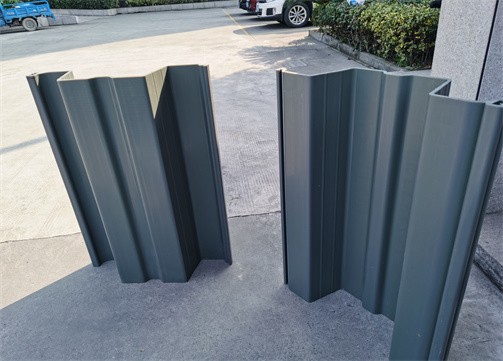
The interlocking system is one of the most important factors when selecting replacement PVC sheet piles.
Sheet piles form a continuous wall by connecting adjacent panels. If the replacement panels use a different interlock design, they may not connect securely with the existing sections, even if their overall dimensions appear similar.
Before ordering replacement materials, compare the original and proposed products for:
Interlock shape and dimensions
Connection direction and engagement
Panel alignment and installation requirements
Compatibility with the existing wall configuration
Accurate measurements help reduce the risk of ordering panels that cannot be installed as intended.
Important dimensions and project details include:
Effective coverage width: The wall length covered by each installed panel after interlocking.
Panel length: The required length based on the existing wall and site conditions.
Panel thickness and profile dimensions: These affect how the replacement section fits and performs.
Required installation depth: The embedded depth depends on site conditions and engineering requirements.
Total replacement quantity: Estimate the number of panels needed, allowing for the actual coverage width and the layout of the repair area.
For example, a project requiring a specific length of replacement seawall may need a different number of panels depending on their effective coverage width. Calculate quantities using the manufacturer's confirmed dimensions rather than the nominal width alone.
Panel length should also be determined based on water levels, soil conditions, loading, and the seawall's design requirements. It should not be selected solely by matching the visible height of the existing panels.
PVC sheet piles are used in seawalls and other water-retaining or soil-retaining applications because they resist corrosion and do not rust like conventional steel sheet piles. However, material suitability depends on the demands of the specific project.
Before selecting a replacement product, consider:
Soil conditions and lateral earth pressure
Water levels and potential changes in water pressure
Wave action, currents, and other site-specific loads
Exposure to sunlight and the surrounding environment
Required service life and maintenance expectations
Applicable project specifications and engineering requirements
If the existing seawall was built with steel, concrete, or another material, switching to PVC should not be treated as a direct, dimension-for-dimension replacement. The new material and wall configuration may require an engineering assessment to confirm structural performance and suitability.
In some projects, only a limited section of the seawall is damaged. Replacing that section may appear more economical than rebuilding the entire wall, but the feasibility of a partial repair depends on the condition and design of the existing structure.
Before deciding on a repair scope, check:
Whether the remaining panels are structurally sound
Whether the existing interlocks can accept the proposed replacement panels
Whether damaged sections can be removed without compromising adjacent panels
Whether the existing wall alignment and support conditions can be maintained
Whether the transition between old and new sections requires a special connection detail
If the original sheet pile profile has been discontinued, a different product may not connect directly to the existing wall. A transition component or a redesigned replacement section may be required. The appropriate solution should be confirmed with the manufacturer and the project engineer.
Older seawall systems may use products that are no longer manufactured or whose specifications are difficult to obtain. In these situations, searching by the original product name alone may not be enough.
Instead, provide potential suppliers with as much technical information as possible:
Existing sheet pile profile and cross-sectional dimensions
Interlock measurements or close-up photographs
Original manufacturer and model, if known
Required panel length and estimated quantity
Drawings of the existing seawall
Photos of the installation and the damaged sections
A supplier can use this information to determine whether a matching profile is available or whether an alternative PVC sheet pile system should be evaluated. Similar appearance does not guarantee that two profiles are compatible, so the connection and structural requirements must be checked before ordering.
Finding compatible replacement PVC sheet piles starts with understanding the existing seawall system. Profile shape, interlocking connections, panel dimensions, material suitability, and site conditions all influence whether a proposed replacement is appropriate.
Rather than ordering based on appearance or nominal dimensions alone, gather the existing product information and have the proposed replacement checked against the original system. This approach can help reduce fitting issues, avoid unnecessary material costs, and support a more efficient seawall repair project.
Previous: None


Address
No.88, Qilian Street, High-Tech Zone, Shijiazhuang, Hebei 050000, China
Tel
+86 311 6779 0805
+86 188 4915 5666
Copyright © Hebei Long Zhuo Trade Co., Ltd. All Rights Reserved Technical Support:  Sitemap