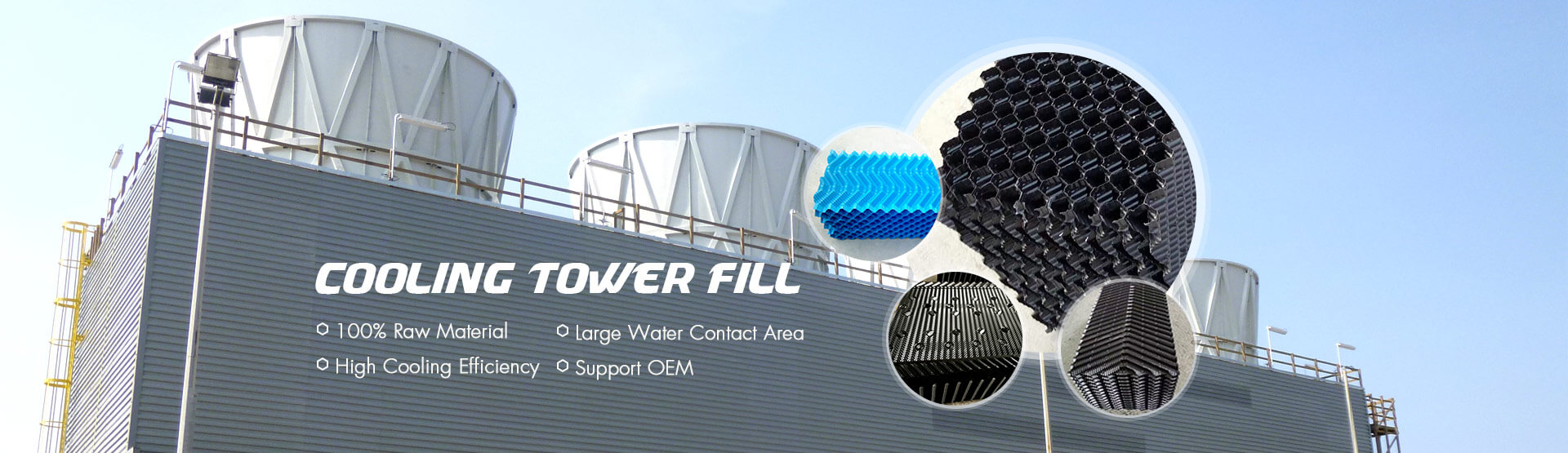

Cooling towers rely on effective contact between circulating water and airflow to remove heat from industrial processes. One key internal component that makes this possible is the cooling tower fill, which increases the contact surface between water and air and slows the water flow to improve heat exchange efficiency.
Among different types of cooling tower fills, Trickle Fill PP Net Fill is widely used in industrial cooling systems due to its durable structure and ability to work under demanding conditions. But many engineers and operators often ask:
Can PP Net Fill operate effectively in cooling towers with low-water-pressure systems?
The short answer is yes—PP net fill can perform well even when water pressure is relatively low, provided the system design supports proper water distribution. This article explains why.
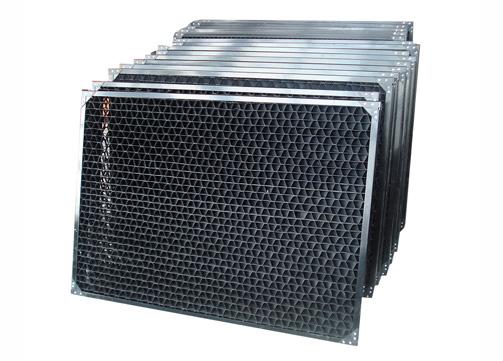
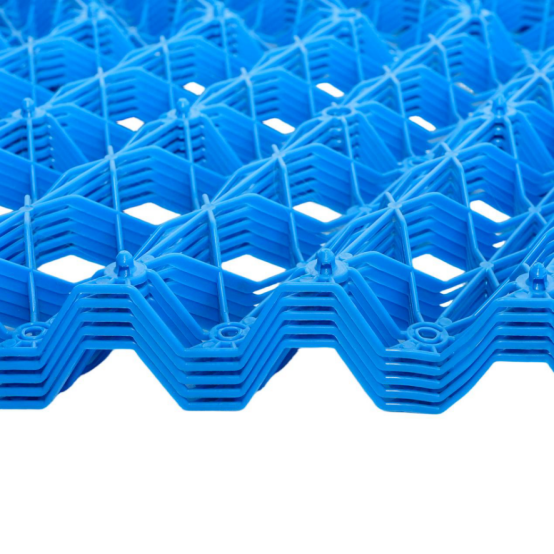
Trickle Fill PP Net Fill is made from polypropylene (PP) and designed with a grid or net-like structure. Instead of forming a continuous water film, the structure allows water to flow through the grid and break into small droplets or thin streams.
This design creates several advantages:
Large contact surface between water and air
Low airflow resistance
Strong mechanical stability
Resistance to high temperatures and chemicals
Polypropylene material is also known for its durability, corrosion resistance, and long service life, making it suitable for industrial cooling towers and aggressive water environments.
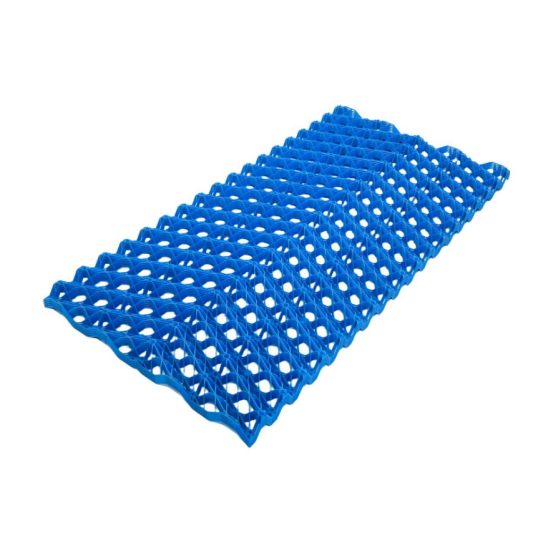
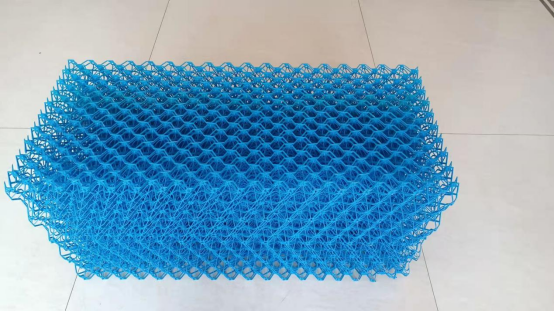
The primary role of any cooling tower fill is to increase the surface area available for heat transfer. When hot water flows over the fill material, it spreads out or forms droplets while air passes through the tower. This interaction allows heat to transfer efficiently and enables evaporative cooling.
In general, the cooling process improves when:
Water remains in contact with air longer
The surface area of water increases
Water distribution is uniform across the fill
Even under lower pressure conditions, these principles can still be achieved with the correct fill design.
Low water pressure usually means that the water distribution energy is limited. Some cooling tower fill types rely on strong water flow to create a stable film across the surface. When pressure drops, film formation becomes uneven and cooling efficiency decreases.
However, Trickle Fill PP Net Fill performs differently.
Because of its open grid structure, it does not rely heavily on high pressure to spread water across flat surfaces. Instead, water simply flows through the net layers and breaks into droplets naturally.
This allows the fill to maintain effective heat transfer even when water pressure is relatively low.
Key reasons include:
1. Open Grid Structure
The net-like design allows water to pass through the structure easily without requiring high hydraulic pressure.
2. Droplet-Based Cooling Mechanism
Trickle fill promotes droplet formation rather than thin film flow, which means the cooling process remains stable even with reduced flow force.
3. Low Hydraulic Resistance
The structure produces low pressure drop, allowing water to move through the fill without excessive resistance.
4. Stable Water Distribution
Even with lower pressure spray systems, water can still distribute across multiple grid layers and maintain effective air-water contact.
Although PP net fill can operate under low water pressure, proper system design still matters. The following conditions help ensure optimal performance:
Adequate Water Distribution System
Spray nozzles or distribution pipes should provide uniform water coverage across the top of the fill.
Correct Fill Depth
The depth of the fill pack should match the cooling load so that water has enough contact time with air.
Proper Airflow
Since evaporative cooling relies on air movement, maintaining adequate airflow through the tower is essential.
Clean Water Path
While PP net fill handles poor water quality better than some film fills, regular maintenance helps prevent fouling.
For cooling towers operating with low water pressure, PP net fill provides several practical benefits:
Reliable cooling performance: The droplet-based cooling mechanism continues to work effectively even with reduced hydraulic energy.
Resistance to fouling: The open grid structure reduces clogging compared with tightly packed film fills.
High mechanical strength: Polypropylene construction ensures durability in industrial environments.
Easy installation and maintenance: Many net fill systems use modular designs that simplify installation and cleaning.

Because of these advantages, Trickle Fill PP Net Fill is widely used in cooling towers in industries such as:
Power plants
Chemical processing facilities
Steel manufacturing
Petrochemical plants
HVAC cooling systems
These applications often operate under varying water pressures and challenging water conditions, making PP net fill a practical solution.
Yes, Trickle Fill PP Net Fill can be effectively used in cooling towers with low-water-pressure systems. Its open grid structure and droplet-based cooling mechanism allow it to maintain efficient heat transfer without relying on high water pressure.
When combined with proper water distribution and airflow design, PP net fill provides a durable and reliable solution for industrial cooling towers, especially in systems where water pressure may fluctuate or remain relatively low.


Address
No.88, Qilian Street, High-Tech Zone, Shijiazhuang, Hebei 050000, China
Tel
+86 311 6779 0805
+86 188 4915 5666
Copyright © Hebei Long Zhuo Trade Co., Ltd. All Rights Reserved Technical Support:  Sitemap