
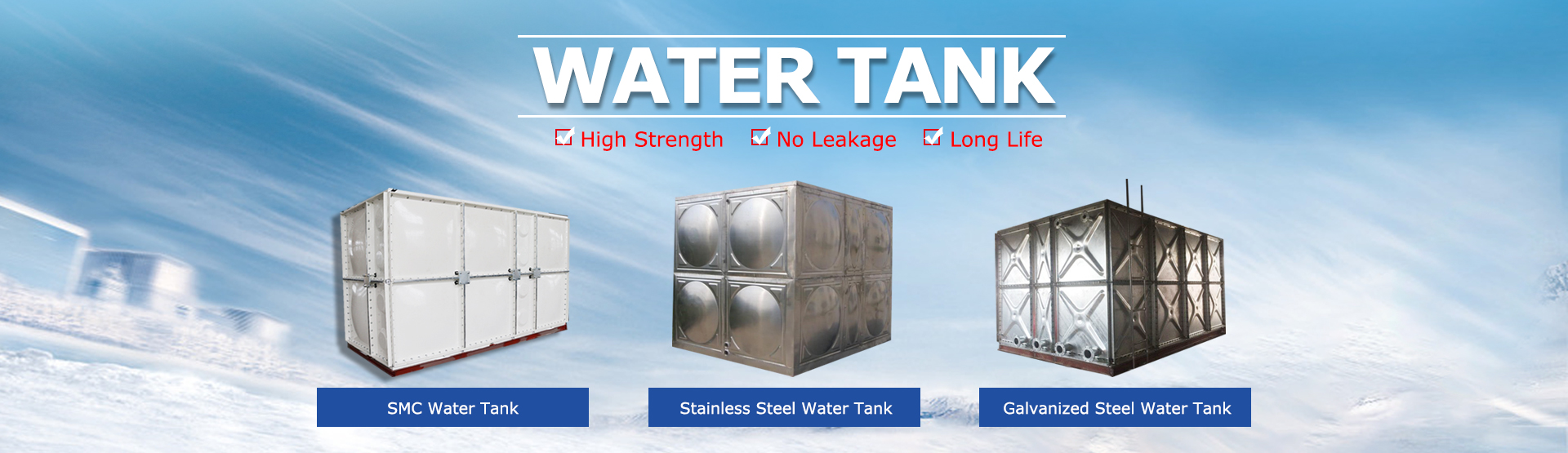
Reliable water storage is essential for commercial buildings, industrial plants, fire protection systems, water treatment facilities, agricultural projects, and public infrastructure. In many modern projects, the tank must provide sufficient storage capacity while fitting into a limited plant room, basement, rooftop, or utility area. This creates several engineering challenges. A large one-piece tank may be difficult to transport through existing access routes, while a fixed tank shape may not use the available floor space efficiently. Humid operating conditions can also increase corrosion and maintenance requirements when unsuitable materials are selected.
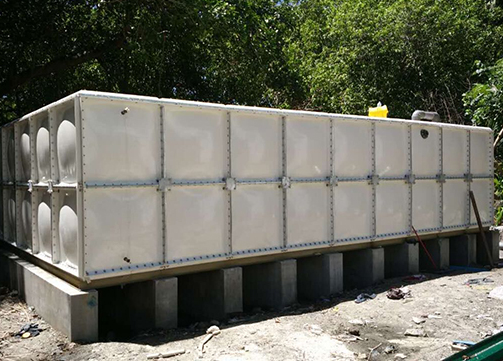
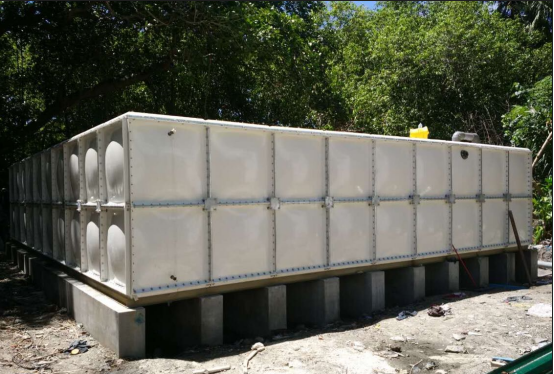
GRP technology provides a practical solution to these challenges. A modular GRP water tank is assembled from factory-molded panels, allowing the tank dimensions, capacity, reinforcement structure, and pipe connections to be configured according to the individual project. The combination of corrosion-resistant composite material and modular construction makes GRP tanks suitable for a wide range of water storage applications.
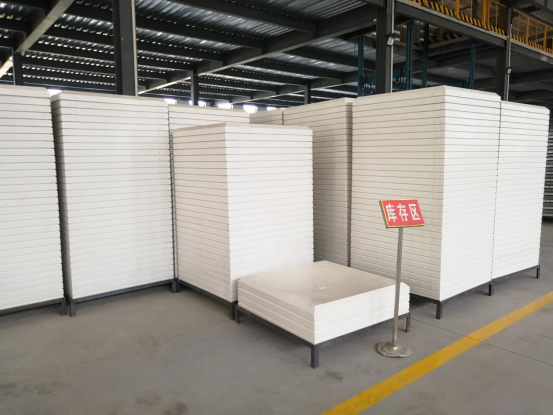
GRP, or glass reinforced plastic, is a composite material made from glass fiber reinforcement and thermosetting resin. It combines high mechanical strength, corrosion resistance, low water absorption, and relatively low weight. In modular water tanks, GRP is commonly compression molded into standardized SMC panels. These panels are assembled on-site with sealing materials, fasteners, and structural supports to form tanks in different capacities and dimensions.
This technology makes GRP water tanks suitable for commercial buildings, industrial facilities, water treatment systems, fire protection projects, and other applications requiring durable and customizable water storage.
One of the main advantages of GRP technology is the ability to create different tank dimensions from standardized panels. Instead of selecting a fixed factory-made tank, engineers can configure the length, width, and height according to the required storage capacity and available installation space.
This flexibility is particularly valuable in mechanical rooms containing columns, pipelines, pumps, electrical equipment, ventilation systems, and maintenance walkways. The tank can be designed around these existing conditions, allowing the project to use the available area more efficiently.
For example, a site with limited ceiling height may require a wider and lower tank. A narrow plant room may be better suited to a longer rectangular configuration. Projects requiring continuous water availability can also consider a divided tank with separate internal compartments.
Long Zhuo supplies GRP tank panels in several modular dimensions:
Panel type | Available size |
Full panel | 1 m × 1 m |
Half panel | 1 m × 0.5 m |
Small panel | 0.5 m × 0.5 m |
These panel combinations allow tank dimensions to be adjusted in 0.5-meter or 1-meter sections. The final tank capacity can be calculated according to daily water consumption, peak demand, emergency reserve time, fire protection requirements, process cycles, irrigation schedules, or rainwater collection volume.
Panel thickness can also be selected according to the position of the panel and the water pressure it must support. Long Zhuo offers panel thickness options including 5, 8, 10, 12, 14, and 16 millimeters.
Panels near the lower section of the tank generally use a configuration suitable for greater hydrostatic pressure, while panels near the top and roof can use a different specification. This allows the structural design to match the actual pressure distribution within the tank.
Transporting a large one-piece tank can require oversized vehicles, cranes, wide site entrances, and large openings in the building structure. These requirements can increase project complexity, especially when the tank is being installed inside an existing building.
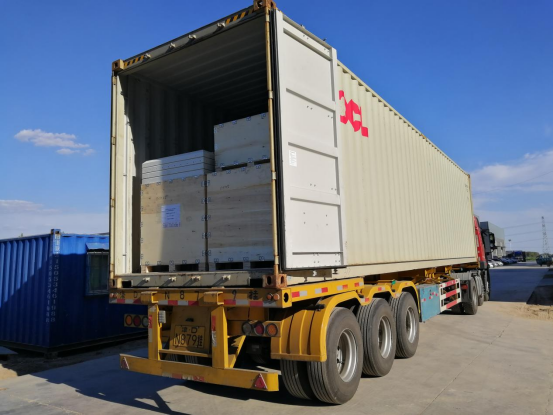
GRP sectional water tank is delivered as separate panels and components. The individual parts can be packed for transportation and moved through narrow doors, corridors, elevators, stairways, basement entrances, or rooftop access points.
This makes modular GRP tanks particularly useful for:
Existing building renovations
Basement plant rooms
Rooftop installations
Factory expansion projects
Hotel and hospital upgrades
Remote agricultural sites
Water treatment facilities with restricted access
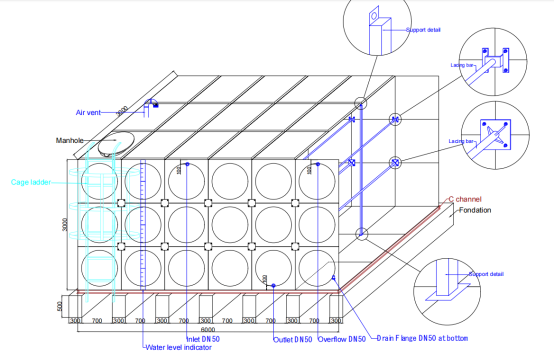
Once the components reach the installation area, the complete tank is assembled on a prepared foundation. The bottom panels are installed first, followed by the sidewall panels, sealing materials, bolts, and structural reinforcement. Roof supports and roof panels are then fitted, together with the required inlet, outlet, overflow, drain, vent, inspection hatch, and access ladder.
On-site assembly also allows the installation team to coordinate the tank with pumps, control systems, water treatment equipment, and existing pipework. This is especially useful in mechanical rooms where several contractors are working within the same limited space.
Water tanks operate in environments where humidity, condensation, and continuous contact with water are unavoidable. Outdoor installations may also be exposed to rain, temperature changes, coastal air, or industrial conditions.
GRP panels resist rust and provide reliable performance in many humid and water-storage environments. This helps reduce the need for repeated painting and anti-corrosion coating maintenance commonly associated with some metal structures.
The corrosion-resistant properties of GRP make modular tanks suitable for:
Commercial building water systems
Industrial process-water storage
Coastal construction projects
Agricultural facilities
Cooling-water systems
Water treatment plants
Outdoor utility installations
High-humidity equipment rooms
The complete tank system also includes structural and connection components, so buyers should select the reinforcement and fastener materials according to the project environment.
Long Zhuo can provide external reinforcement made from hot-dip galvanized steel. Internal support options may include galvanized steel or stainless steel 304 rods and tie bars. Stainless steel components are commonly considered when the stored water application or operating environment requires enhanced corrosion resistance.
GRP combines the reinforcement of glass fibers with the flexibility of a molded resin structure. This gives the material a useful strength-to-weight balance for modular water tank construction.
The molded profile of each panel helps distribute water pressure across its surface. Panel thickness, tank height, reinforcement spacing, fastener arrangement, and foundation design work together to form the complete structural system.
Long Zhuo lists the following panel properties for its GRP modular water tank:
Property | Listed value |
Tensile strength | ≥70 MPa |
Flexural strength | ≥100 MPa |
Bending modulus | ≥7.0 GPa |
Water absorption | ≤1.0% |
Fiberglass content | ≥25% |
Light transmission | Nil |
The relatively low weight of the individual panels provides several practical benefits during transportation and installation. Workers can move the components through restricted areas more easily, and the project may require less heavy lifting equipment than a comparable preassembled tank.
Although the panels are lightweight, the building foundation must still support the total operating load of the complete tank and stored water. Since one cubic meter of water weighs approximately one metric ton, foundation preparation remains an important part of the engineering design.
A modular tank must resist the pressure created by the stored water while maintaining alignment across the panel joints. GRP tanks use internal reinforcement, external reinforcement, or a combination of both depending on the tank height, dimensions, and installation conditions.
Internal reinforcement may include tie rods and support members installed within the tank. This arrangement can reduce the amount of external space required around the tank. External reinforcement uses steel frames and braces positioned outside the tank walls, keeping much of the support structure away from the stored water.
The preferred arrangement can be selected according to:
Tank dimensions
Stored water height
Available maintenance space
Internal water requirements
Project specifications
Reinforcement material preference
Panel joints are sealed using rubber or foam sealing materials placed between the molded flanges. Bolts, nuts, and washers hold the panels together and compress the seal to create a continuous water-tight connection.
The modular bolted construction also supports systematic inspection. During maintenance, technicians can check the panel joints, bolts, seals, structural supports, and pipe connections as part of the facility’s routine water tank management program.
Water storage tanks require regular inspection, cleaning, and maintenance. GRP modular tanks can be equipped with practical access and drainage components according to the tank size and project requirements.
Common accessories include:
Inspection hatch
Internal access ladder
External ladder
Drainage panel
Screened ventilation opening
Overflow screen
Float valve
Water-level indicator
Internal divider
Long Zhuo provides a standard 600 × 600 millimeter inspection hatch, while customized dimensions can be discussed for specific projects. Internal ladders can be installed in deeper tanks, and external ladders can provide access to the tank roof and manhole.
Drainage design also influences maintenance efficiency. A concave bottom panel can guide the remaining water toward the drainage connection during emptying and cleaning.
For large tanks, internal dividers can create separate compartments. This type of arrangement can support facilities that want to organize water storage into different service zones or maintain part of the available capacity during scheduled inspection.
The smooth molded surfaces of GRP panels also support visual inspection and routine cleaning. Access space around the tank, internal movement areas, drainage position, and inspection openings should all be considered during the initial design stage.
Controlling the internal tank environment is important for domestic water, treated water, process water, firefighting water, irrigation water, and rainwater storage.
GRP panels can be produced with an opaque construction that prevents exterior light from passing through the tank wall. Long Zhuo lists nil light transmission as one of the properties of its GRP panels.
The complete system can also include screened vents and overflow openings to support ventilation while reducing the entry of insects and debris.
For outdoor, rooftop, cold-climate, or temperature-sensitive installations, insulated panel options can be considered. Insulating materials may be incorporated into the tank panel structure or installed as part of an external cladding system.
An insulated GRP tank can help reduce heat transfer between the stored water and the surrounding environment. The final insulation arrangement may also include pipe insulation, frost protection, external cladding, shading, heating systems, or temperature monitoring depending on the local climate.
A modular water tank must integrate with the wider building or industrial water system. GRP panel construction allows the pipe connections to be positioned according to the project drawing.
Typical tank connections include: Water inlet, Main outlet, Drain outlet, Overflow connection, Ventilation opening, Pump suction connection, Recirculation line, Water-level control connection, Spare nozzle
Connection sizes and flange materials can be customized to match the project piping. Long Zhuo offers hot-dip galvanized steel and stainless steel 304 flange options.
Pipe positions should be confirmed before production because the connection layout can affect the panel arrangement, reinforcement structure, and internal maintenance access.
Additional accessories such as inspection hatches, ladders, float valves, level indicators, dividers, ventilation screens, and drainage panels can also be included in the tank proposal.
Providing these details at the quotation stage helps the manufacturer prepare a more complete design and reduces changes during installation.
The combination of modular construction, corrosion resistance, customizable dimensions, and convenient installation makes GRP tanks suitable for multiple industries.
Commercial and Residential Buildings
Hotels, office buildings, shopping centers, apartment developments, schools, hospitals, transport stations, and sports facilities use modular water tanks for domestic water, cleaning water, emergency reserves, rainwater harvesting, HVAC makeup water, and fire protection.
GRP panels are especially suitable for basement and rooftop installations where a large preassembled tank cannot be transported directly into the final position.
Industrial Facilities
Manufacturing plants use GRP tanks for process water, cooling water, production support, equipment washing, treated water, utility systems, and firefighting reserves.
Customized connection positions allow the tank to integrate with pumps, filters, cooling equipment, production lines, and existing plant pipelines.
Water Treatment Systems
Water treatment projects may use GRP tanks for raw water, filtered water, treated water, backwash water, rainwater, reuse water, and pumping stations.
The modular design allows engineers to coordinate the tank with filtration systems, dosing equipment, pumps, level controls, and other water treatment components.
Fire Protection Systems
GRP sectional tanks can store water for sprinkler systems, hydrants, fire pumps, and water-mist systems.
Tank capacity, usable volume, refill arrangement, pump connection, overflow size, and compartment design can be configured according to the fire protection project.
Agricultural Projects
Agricultural applications include irrigation, greenhouse water storage, livestock water, hydroponic systems, farm utility water, and rainwater harvesting.
The separate GRP panels can be transported to remote locations and assembled close to the point where the stored water will be used.
GRP technology gives modular water tanks the flexibility required by modern commercial and industrial water storage projects. Standardized molded panels can be combined to create customized capacities and dimensions, while the corrosion-resistant composite material supports use in humid, outdoor, agricultural, and industrial environments.
The lightweight individual panels simplify transportation and on-site assembly, especially in basements, rooftops, existing buildings, and other locations with limited access. Configurable reinforcement, pipe connections, inspection components, drainage systems, compartments, and insulation allow the complete tank to be adapted to the project rather than supplied as a fixed standard unit.
Long Zhuo can design a GRP modular water tank according to the required storage capacity, installation dimensions, water application, reinforcement system, pipe connection layout, and accessory requirements.
Submit your project capacity, tank-room dimensions, stored water type, installation location, and piping drawing to receive a customized GRP water tank proposal.


Address
No.88, Qilian Street, High-Tech Zone, Shijiazhuang, Hebei 050000, China
Tel
+86 311 6779 0805
+86 188 4915 5666
Copyright © Hebei Long Zhuo Trade Co., Ltd. All Rights Reserved Technical Support:  Sitemap