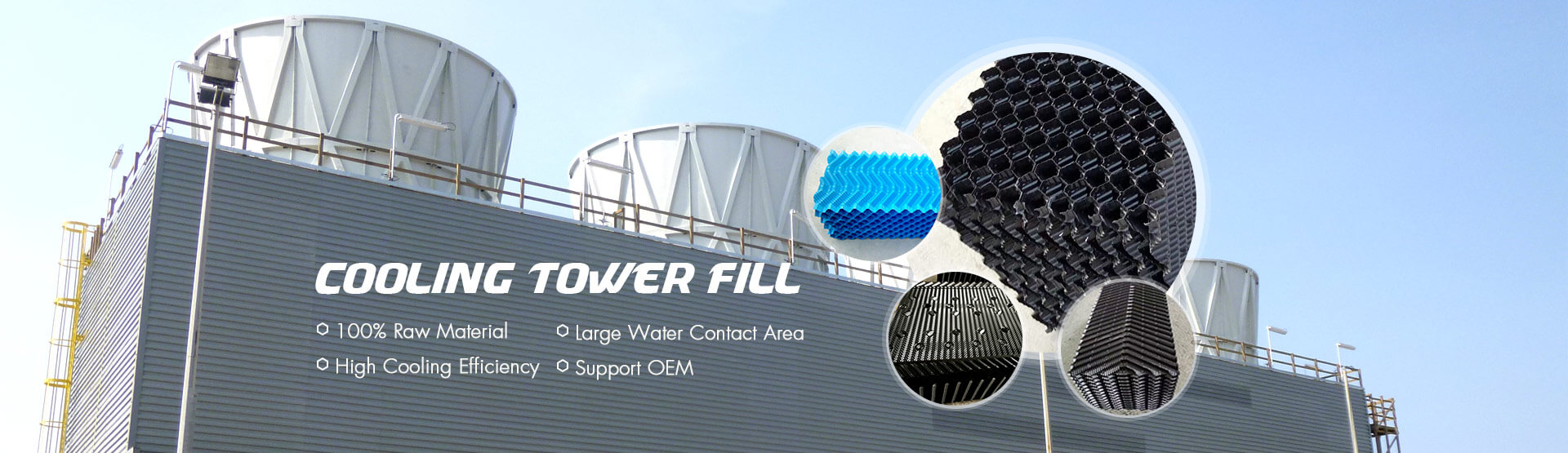

Cooling tower fill is responsible for more than 70% of the total heat-dissipation performance of a cooling tower. This makes cooling tower fill selection a decisive factor in determining cooling efficiency, energy consumption, system stability, and long-term operating cost. When industries ask “how to choose cooling tower fill,” they are essentially asking how to improve overall cooling tower performance with the right component.
Multiple factors—such as cooling tower type, heat characteristics, cooling load, circulating water quality, ventilation conditions, thermal resistance, structural support, and budget—directly influence the decision. A scientifically optimized approach to cooling tower fill selection helps ensure maximum cooling capacity, minimal maintenance, and long service life.
One of the most fundamental principles in cooling tower fill selection is understanding the water quality entering the system. Water quality determines the likelihood of clogging, scale formation, and long-term operational stability:
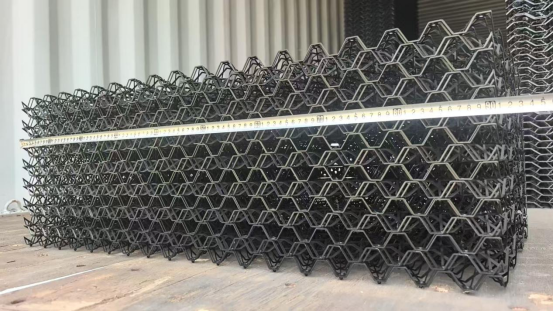
When suspended solids exceed 100 mg/L, splash fill (also called “drift” or “splash-type fill”) is the most suitable option. Splash fill has wider water channels, reducing the chance of clogging and allowing contaminated or fiber-rich water to pass through effectively. Explore PP Net Trickle Fill for high-resistance, low-maintenance options.
When suspended solids are below 50 mg/L, film fill becomes the preferred solution. Film fill offers higher heat transfer efficiency because water forms thin films across its surface, maximizing contact area.
For suspended solids between 50–100 mg/L, splash fill is recommended because it provides a safer resistance profile and reduced fouling risk.
Different tower designs require specially matched fill geometries and installation arrangements; therefore the cooling tower fill selection process must consider the structural layout:
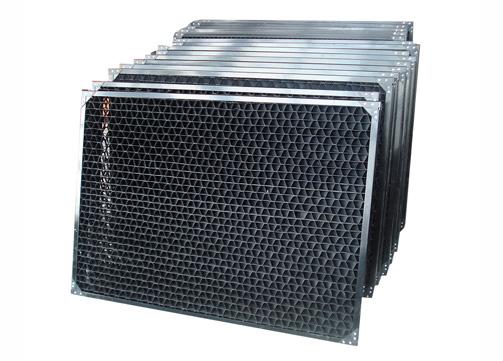
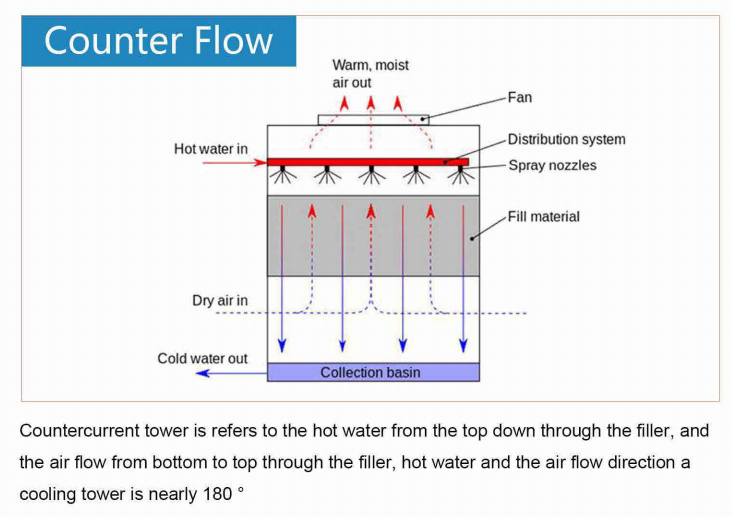
Counterflow cooling towers: Fill is typically installed above the air inlet openings. Both film fill and splash fill may be used depending on cooling goals. Film fill helps reduce overall tower height and optimize engineering cost, which aligns well with general industrial design standards. High-performance options include Counterflow Fill, which is designed for stable airflow and efficient heat exchange.
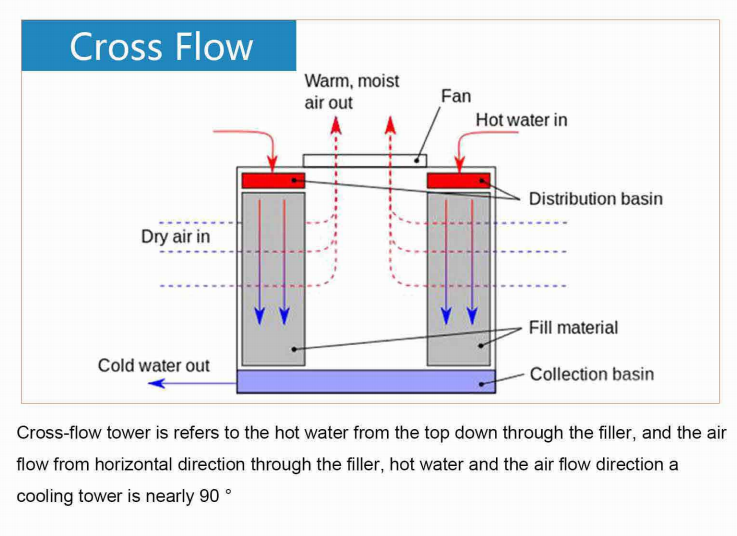
Crossflow cooling towers: The height of the fill aligns with the height of the air inlet. Deeper splash fill performs efficiently here because it increases air-water contact and maintains stable airflow patterns. High-efficiency Crossflow Fill ensures optimal cooling in this design.
Even though no strict limit exists regarding fill height, the depth of fill affects the diameter of the cooling tower. Engineering practice suggests maintaining a fill-height-to-diameter ratio of approximately 2.0 to 2.5 to ensure the ideal balance between structure and cooling performance.
Hot water temperature is often overlooked, yet it plays a central role in cooling tower fill material selection. Each fill material has specific temperature tolerance and aging characteristics:
At water temperatures ≤45°C, modified PVC offers the highest cooling efficiency due to excellent hydrophilicity.
When hot water temperature exceeds 45°C, CPVC and PP materials become more suitable because they resist deformation more effectively.
At temperatures above 60°C, PP fill is the most reliable choice. Its superior heat tolerance allows it to perform in demanding industrial cooling environments.
When temperatures exceed 70°C, plastic materials—including PVC, CPVC, and PP—lose stability. Metal-based aluminum alloy cooling tower fill is recommended for extreme conditions.
To achieve efficient cooling tower performance, fill must offer balanced heat transfer and airflow resistance. This balance differs between natural draft and mechanical draft towers:
Natural draft towers rely on the chimney effect. Fill with slightly higher resistance can actually improve draft efficiency.
Mechanical draft towers use fans to push or pull air. Low-resistance fill may outperform high-efficiency fill because excessive resistance forces fans to operate at higher pressure, consuming more energy.
Advanced evaluation tools compare thermal performance curves and pressure-drop characteristics to identify the most effective fill under specific ventilation conditions.
For large industrial cooling towers, proper fill installation ensures long-term stability and reduced maintenance:
Fill modules must be stable during hoisting and installation. Excessive shaking may lead to misalignment or deformation.
When fills are supported directly on beams, the beams should minimize airflow obstruction while supporting the structural load. Beam spacing must match fill block dimensions to avoid gaps and sagging.
Support grids must match corrosion resistance with the fill material, and grid spans must consider additional airflow resistance.
After evaluating water quality, tower structure, hot water temperature, ventilation system, and installation conditions, the best cooling tower fill must offer:
Excellent thermal performance and heat-resistance characteristics
Sufficient rigidity to maintain shape under load
Strong corrosion resistance and aging resistance
Flame-retardant properties for safer industrial operation
Low airflow resistance with high heat-exchange efficiency
These properties together define the ideal solution for maximum cooling tower performance and long-term reliability.
If your cooling tower efficiency is dropping, or if your fill is aging, fouling, or underperforming, upgrading with suitable cooling tower fill types can significantly improve cooling performance.
Our services include:
Customized engineering solutions – Tailored cooling tower optimization plans based on real-world operating conditions.
Performance enhancement – Improved cooling efficiency, reduced energy consumption, and optimized fan–fill matching.
Long-term durability – Prolonged equipment lifespan, reduced maintenance workload, and more stable operation.
Contact us now for a free cooling tower evaluation and discover how professional cooling tower fill selection can help your system stay efficient, reliable, and cost-effective even in extreme temperatures.


Address
No.88, Qilian Street, High-Tech Zone, Shijiazhuang, Hebei 050000, China
Tel
+86 311 6779 0805
+86 188 4915 5666
Copyright © Hebei Long Zhuo Trade Co., Ltd. All Rights Reserved Technical Support:  Sitemap